
Oklahoma Has No Public Warrant Database
No public statewide warrant search exists for Oklahoma. The statutory arrest-warrant feed runs through restricted law-enforcement channels, and the public court portals are docket systems rather than warrant registers. The OAG Most Wanted campaign is selective, not comprehensive.
Key point: No result from a court docket, county list, or curated campaign proves there is no Oklahoma warrant. Confirm status with the issuing court and serving agency.
How Oklahoma Warrants Are Tracked
Every Oklahoma warrant begins with a court order. County trial cases sit in the Oklahoma District Court. City ordinances and municipal traffic matters belong to the local Municipal Court or Municipal Court of Record. The District Court Clerk keeps the district case files, while municipal courts keep their own city records. Sheriffs and other authorized peace officers serve the paperwork. Use Browse Counties to reach the right court and sheriff layer. State agencies swap some warrant-identification data, but only for law-enforcement use. No public statewide register exists. A public docket can help you locate a case. It will not confirm an active warrant. The order itself, plus any bond or recall action, stays with the issuing court and local agency. Note: Oklahoma's public docket, restricted arrest-warrant feed, and local court file each answer a different question on their own.
Oklahoma OLETS Holds Restricted Warrant Data
The Oklahoma Department of Public Safety runs the Oklahoma Law Enforcement Telecommunications System, known as OLETS. Only authorized public-safety and criminal-justice users can touch it. Under 47 O.S. §§2-124 and 2-124.1, the network supports interstate data exchange. The Office of the Administrative Director of the Courts feeds DPS current computerized arrest-warrant identification information for dissemination to OLETS users. Section 2-129 keeps protected system information with authorized agencies. Oklahoma publishes no public query for any of this. No public field schema exists. No warrant subtype list, upstream county roster, or per-record feed cadence appears in the statute or DPS materials. The DPS page explains the network and its agency support. Read the official OLETS overview for that public description.
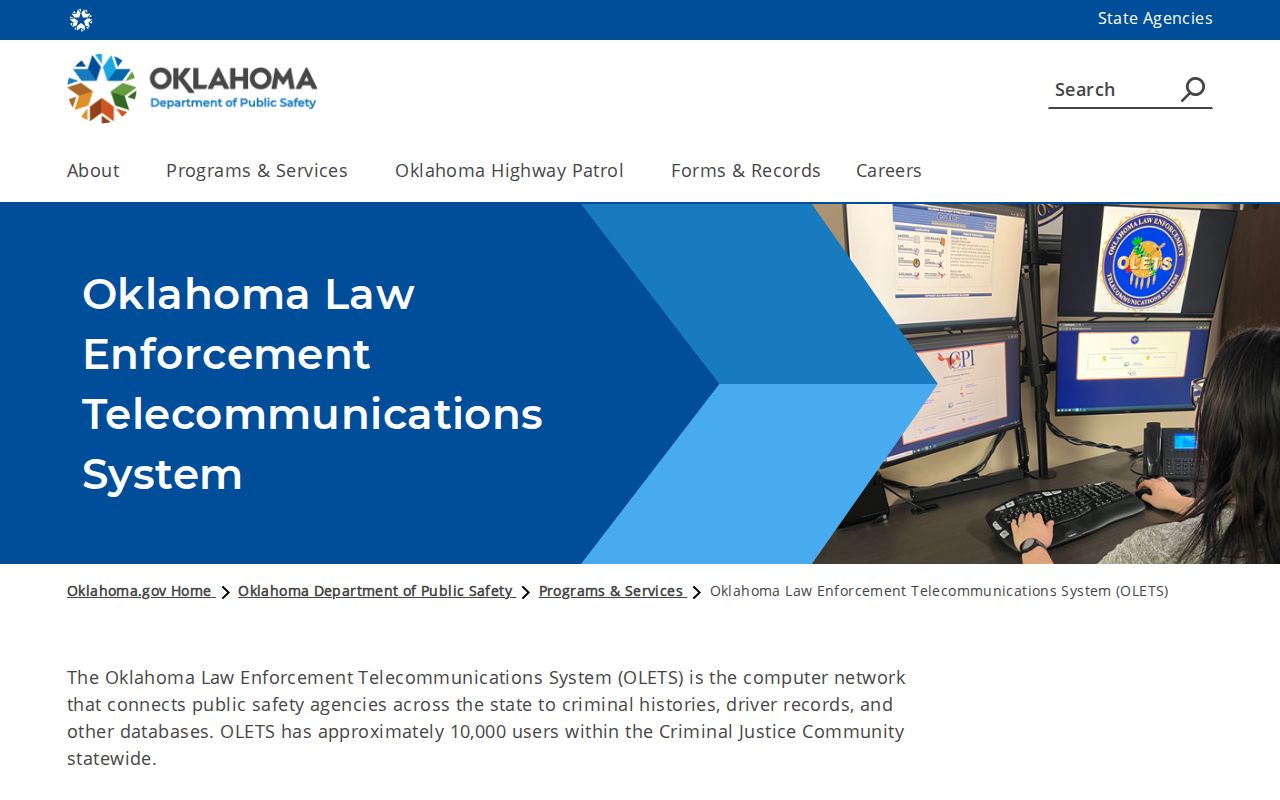
The official Oklahoma page covers agency network support. It is not a personal warrant confirmation line, and no public Oklahoma warrant search lives there.
The Oklahoma Warrant Database
No single public Oklahoma warrant database exists. Each Oklahoma channel below holds different information under different access rules. A public docket shows court events, not warrant status. The OLETS arrest-warrant data flow stays law-enforcement-only, while local courts and sheriffs keep their own files.
| System | What It Holds | Access and Limit |
|---|---|---|
| Oklahoma OSCN | Public Oklahoma court dockets and case events for participating courts | Public; not a comprehensive warrant register or live active-status confirmation. |
| Oklahoma ODCR | Participating non-OSCN Oklahoma court docket data | Public/vendor-hosted; coverage varies and does not make a statewide warrant index. |
| Oklahoma OLETS | Restricted criminal-justice network; receives the statutory arrest-warrant identification feed for authorized users | Law-enforcement users only; no public query. |
| Oklahoma ODIS | Agency records-management application with warrant and citation modules | Participating criminal-justice agencies; no public lookup. |
| Oklahoma NCIC access | National criminal-justice network that may carry eligible entered warrant information | Restricted to authorized agencies; not public search. |
| Oklahoma OAG 10 Most Wanted | Selected fugitive campaign profiles and tip process | Public but curated; not a warrant search or complete list. |
Each system keeps its own records and rules. No single row replaces confirmation from the issuing clerk and serving agency in Oklahoma.
Oklahoma ODIS Is an Agency Records System
ODIS is a records system the Oklahoma State Bureau of Investigation runs for agencies, not something the public can search. OSBI describes it as a law-enforcement and municipal-court records-management application, with modules for warrants and citations. Its job in Oklahoma is record keeping and information sharing between agencies. OSBI has reported 331 law-enforcement agencies using ODIS. That count is dated, and it does not prove every Oklahoma county or every warrant type is covered. OSBI also handles Oklahoma's NCIC communications function. Both ODIS and NCIC are restricted criminal-justice systems, so neither works as a public Oklahoma warrant lookup. One more caution applies here. A court docket or county webpage that shows nothing does not mean no warrant exists, so the issuing court or its clerk remains the place to confirm. The official OSBI ODIS overview gives the agency's own description of the system.
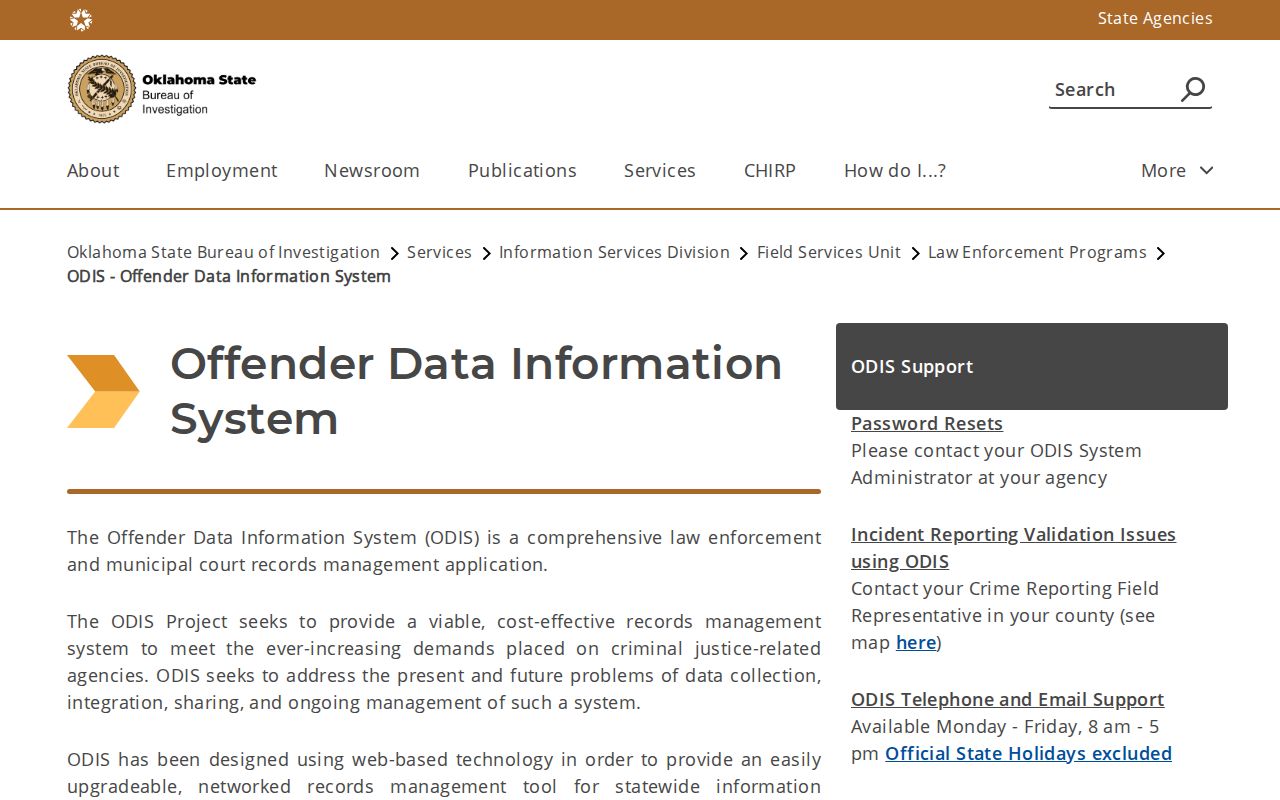
OSBI's Oklahoma page describes the software itself. It shows no individual record or warrant lookup. Note: Oklahoma's ODIS and NCIC are agency tools, not public portals for a person's active-warrant search.
From County Warrant to Statewide Index
Oklahoma law draws a narrow path from courts to law enforcement. Under 47 O.S. §2-124.1, the Office of the Administrative Director of the Courts must give DPS current computerized arrest-warrant identification information for dissemination to OLETS users. That is restricted dissemination only. It creates no public statewide database.
Oklahoma documented route: Issuing court record › Office of the Administrative Director of the Courts › DPS › authorized OLETS users
Oklahoma public sources never spell out the exact local entry step. County participation is unstated. So are covered warrant categories and whether city process is included. No verified arrow runs from every county sheriff to a complete state or national index. Ask the issuing court and the local serving agency about the actual Oklahoma record. For county routing, use Browse Counties.
Oklahoma's Feed Has No Public Coverage Table
Oklahoma publishes no county-by-county participation map for its arrest-warrant feed. Neither the statute nor the agency pages list which warrant subtypes are included, which fields come back from a search, or how far back the records go. There is no public per-record update interval either. The word “current” in the statute sounds like a schedule, but it is not one. It promises no refresh timing, and it does not guarantee that a case will surface in any particular query. That gap matters for Oklahoma residents comparing sources. The public docket, the restricted feed, the ODIS agency system, and the curated Most Wanted campaign each serve a different purpose and must stay distinct. A city ordinance warrant, for example, may live only in that city's own Oklahoma court and police channel. A docket entry can show a case event without proving that an Oklahoma warrant is still active. When coverage is the question, ask the office that actually holds the record instead of inferring statewide coverage from any single source.
Federal Fugitive Warrants in Oklahoma
Federal fugitive warrants run on a separate track from Oklahoma's county and municipal process. Under 28 U.S.C. §116, the state falls within three federal districts: Western, Northern, and Eastern. Each sits in the U.S. District Court system. The U.S. Marshals Service executes federal court orders and works with state, local, tribal, and federal partners on fugitive cases. Oklahoma Highway Patrol plays a supporting role too. It helps serve specified District Court traffic warrants and assists fugitive manhunts under Title 47. It offers no public warrant portal, though. The OHP troop contact page simply identifies its public contact route. Keep the two systems straight. A state warrant that crosses an Oklahoma county line stays state process. A federal warrant never becomes a county warrant. The DPS-USMS memorandum effective December 8, 2025 covers joint fugitive work, not a shared public search, and the official Western District court site lays out federal court information for Oklahoma.
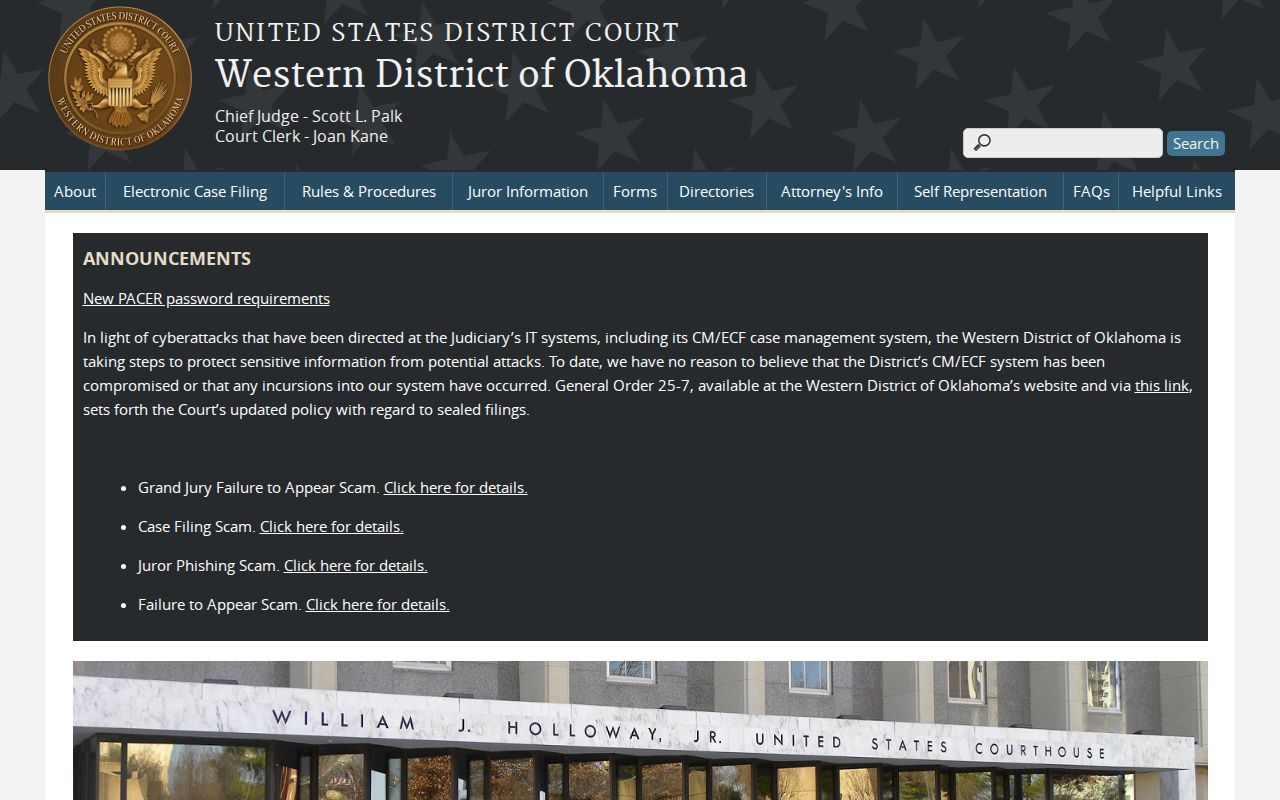
A federal court page is not an individual warrant record. Sealed or nonpublic process may never reach a public docket at all. For another official federal judicial source, the Oklahoma Northern District court site covers that district's Oklahoma operations.
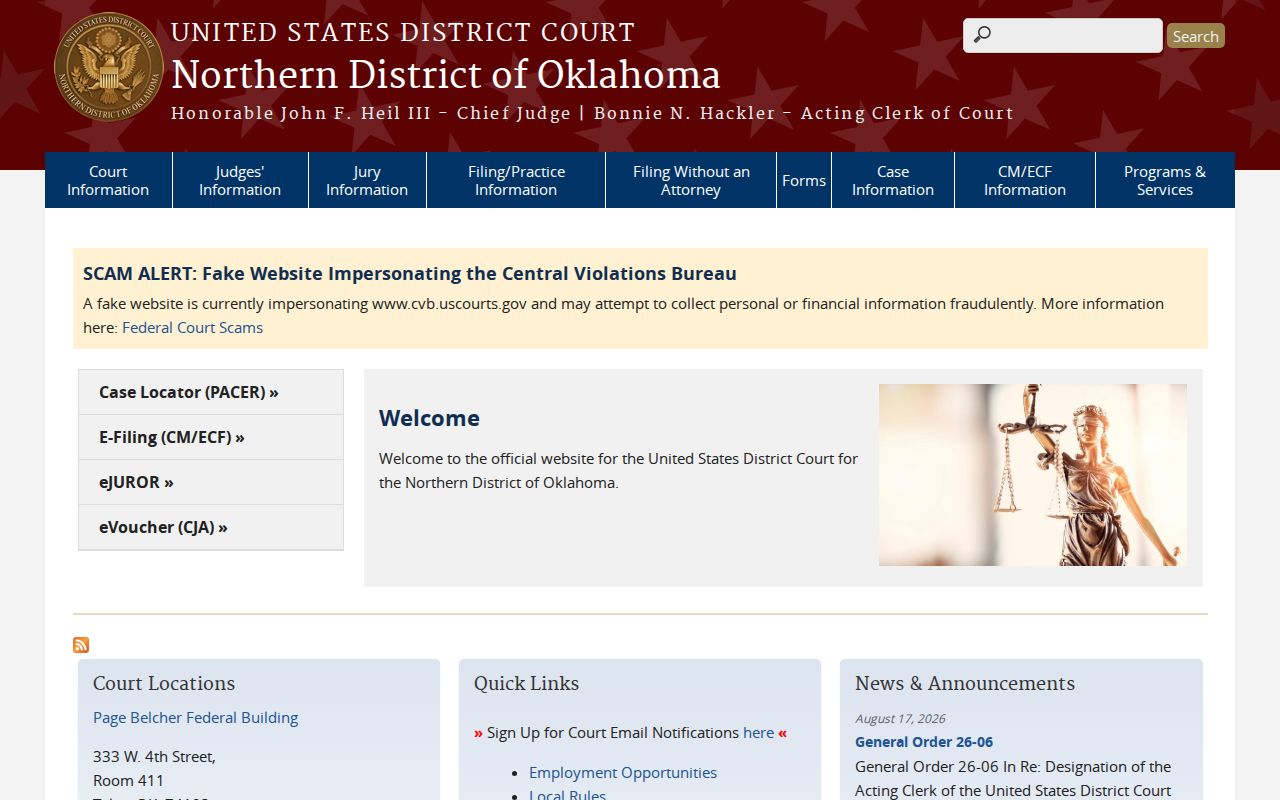
These districts hold federal case records only. They do not confirm state or city warrant status. Note: Oklahoma federal warrant process runs through the district court and the U.S. Marshals, entirely separate from county and municipal cases.
Oklahoma Federal Dockets Do Not Confirm Warrants
The PACER Case Locator is the tool for finding filed federal cases across Oklahoma's districts. It is a docket service, though, not a warrant-status check. A public PACER account is required. Sealed material never appears. So a warrant or sealed indictment can be missing even when you search the correct Oklahoma federal district. Use PACER to locate public case information and nothing more. For Oklahoma federal-process questions, call the relevant federal court clerk or the official U.S. Marshals district office. An attorney is the right person to ask about an individual case. And never read a PACER no-hit as proof that no federal warrant exists. To start searching public federal docket records, open the official PACER Case Locator.
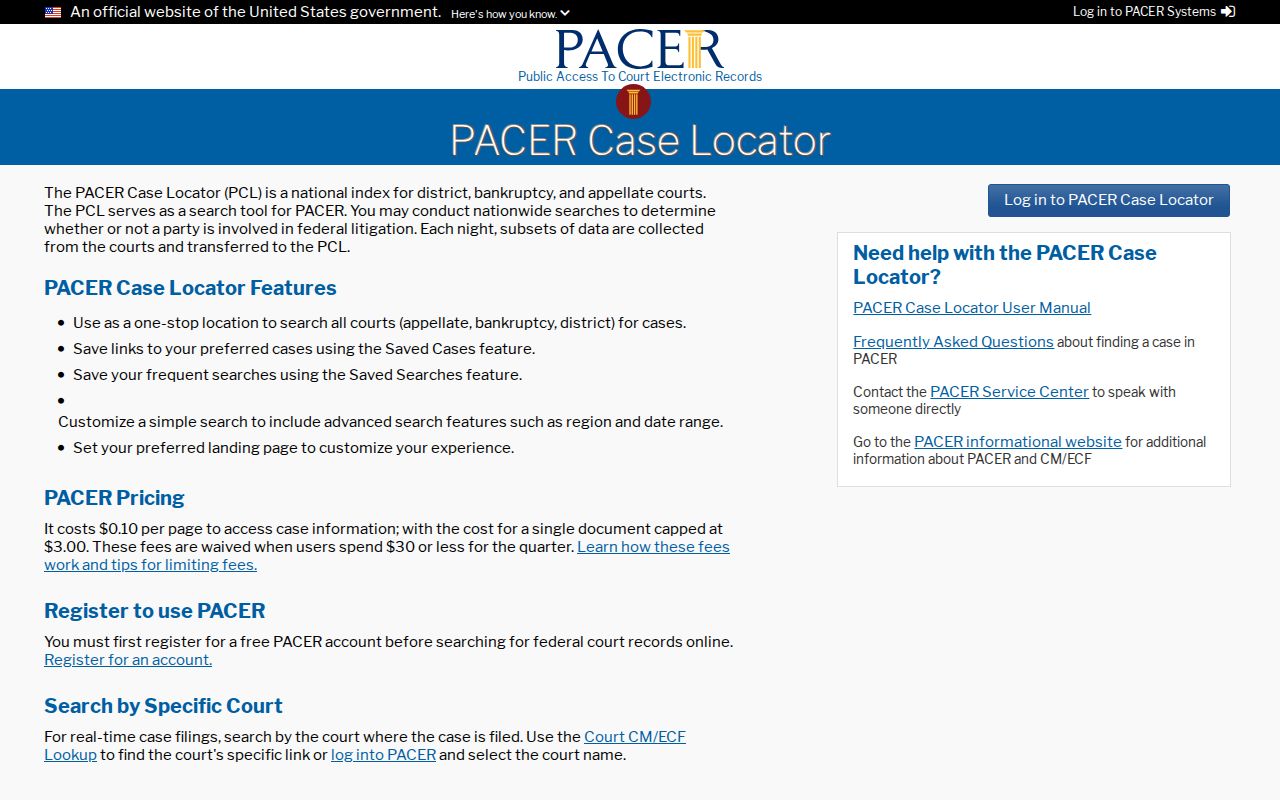
The case-locator entry page covers only public filings. No docket can expose sealed records or certify warrant status.
Statewide Index vs Oklahoma County Warrants
Oklahoma has no public statewide warrant index to hold up against county lists. The statutory OLETS feed is restricted to law enforcement. Oklahoma county sheriff searches stay local and nonuniform. The actual court order still belongs to the issuing court, while the sheriff keeps its own service and booking information. A public docket can help you find the case, but it cannot replace confirmation from either office.
| Question | Statewide Channels | County or City Record |
|---|---|---|
| What it is | Restricted Oklahoma arrest-warrant identification and separate court-docket services | Oklahoma issuing court case and the local serving agency's record |
| Public access | Oklahoma OLETS/ODIS/NCIC are restricted; OSCN/ODCR show participating dockets | Search, phone, walk-in, or records-request options vary by Oklahoma county or city |
| Coverage | Exact Oklahoma warrant subtypes, local participation, and update cadence are not published | Each Oklahoma custodian can confirm only its own records and court orders |
| Next step | Use Oklahoma public docket data only to identify a case or event | Ask the Oklahoma clerk about the order and the sheriff or police about service status |
Use Browse Counties to reach the local court and sheriff route for any county. A municipal matter needs its own city court or police channel. Note: Oklahoma county warrant lists are local records, and the restricted statewide data carries no public coverage table.
Route an Oklahoma Warrant Question to Court
When a public database cannot answer a warrant question, the Oklahoma court and local agency remain the reliable route. The county page identifies the District Court Clerk and sheriff for a county case. A city citation belongs with that municipality's court and police office. Oklahoma offers no statewide sheriff portal and no public warrant confirmation line.
- Use the Oklahoma citation, notice, or case number to identify the county or city and the issuing court.
- Check Oklahoma OSCN or ODCR for a participating public docket, remembering that docket events do not confirm an active warrant.
- Open Browse Counties to locate the relevant county court clerk and sheriff; use the city's own court route for ordinance matters.
- Ask the Oklahoma clerk whether the warrant remains active, which appearance or bond term applies, and what order recalls it. Ask the serving office about its own status.
- For copies or a disposition record, submit a focused request under the Oklahoma Open Records Act to the agency that holds it.
The requested file and the public status question may belong to different offices. Keep the court's written disposition, and confirm with the sheriff or another Oklahoma agency that it actually received it.
How Oklahoma Warrant Systems Went Digital
Oklahoma's data tools grew in layers, never as one public warrant database. OSBI's own history dates installation of the state's NCIC terminal to 1968. The Legislature created the DPS Law Enforcement Telecommunications Systems Division in 1975. Then 47 O.S. §2-124.1 took effect in 1994. It requires court-administration delivery of current computerized arrest-warrant identification data to DPS for OLETS dissemination. OSBI materials place ODIS deployment in 1998–99. Its transfer to OSBI came in 2009. Public docket access grew separately, through OSCN and participating ODCR records. The 2024 OAG Most Wanted launch added a curated public campaign rather than a full warrant index. Those Oklahoma milestones explain today's divided access. Court dockets, restricted law-enforcement systems, local warrant offices, federal dockets, and a selective fugitive program all remain separate. For the documented milestones and court-access context, see the OSBI history, the official Title 47 text, and the FY2025 OSCN annual report. Note: Oklahoma's historic technology milestones explain separate networks and docket portals, not a single public active-warrant database.