
Oklahoma Traffic FTA Creates Separate Records
Oklahoma treats the court case and any driver-privilege suspension as related but separate records. Miss a qualifying court date and the court may start warrant process. The clerk's separate report to Service Oklahoma can then suspend the license. That suspension is not a warrant. An Oklahoma traffic warrant may still sit open at the issuing court long after the license side is fixed. So a payment or an agency update in one channel proves nothing about the other. Before trying to clear an old Oklahoma case, ask which office holds each record. Ask which event is still open, too. Confirm whether a written court disposition or a separate reinstatement step is still needed. Oklahoma offers no public statewide name or driver-license search for a traffic warrant. The OLETS arrest-warrant identification feed is restricted to authorized law-enforcement users. It cannot answer a resident's warrant question. And a license-status inquiry cannot establish whether an Oklahoma court issued or recalled process; the court and the credential agency keep those answers separately.
How Traffic Warrants Work in Oklahoma
An Oklahoma traffic warrant is court process, not a new entry on a driver history. The statute behind it is narrow. Under 22 O.S. §1115.1A, the process can apply when someone was released on a qualifying misdemeanor or municipal traffic citation with a promise to appear, then failed to timely plead or appear without good cause. Parking and standing citations are excluded. The law does not make every missed date a warrant. The issuing court controls the case. That is the Oklahoma Municipal Court or District Court named on the citation. A clerk may also file a separate report that touches driving privileges. Your home county is not always the court's county. A license consequence never moves a citation into a public Oklahoma warrant register. Use the city or court shown on the ticket. Confirm the order with that court. When an Oklahoma traffic ticket may fit the statute, the clerk can identify the citation event, the court's notice record, and whether a warrant was truly issued. The details do not always line up. If the citation, the promise to appear, or the failure event differs, do not assume the same Oklahoma traffic-warrant path applies. Request the case-specific explanation from the issuing court. Note: an Oklahoma traffic warrant is court process, and a ticket balance plus a driver-privilege record may need separate confirmation.
Oklahoma's 2024 Traffic Notice Change
House Bill 3885 took effect November 1, 2024. It rewrote one piece of the qualifying §1115.1A process in Oklahoma. The clerk's notice window changed from 120 days after the citation to one year. The CLEET revised legal update summarizes the change. The linked statute has the governing text. That limit describes one stated Oklahoma traffic process. It is not a general expiration rule. No statewide rule wipes out a case or warrant just because time passed. The citation, release terms, court, and failure event still control. If an older Oklahoma ticket raises a timing question, ask the issuing clerk which statute and case event apply, and never assume a warrant vanished just because an online record is old or missing.
How Oklahoma Flags a License Hold
Oklahoma's public system offers no all-court FTA warrant lookup. The statewide arrest-warrant feed sent to DPS through OLETS serves authorized law-enforcement users only. So a resident cannot query it. A separate authorized court channel carries compliance information to the credential agency. The guidance is public. Still, no restricted reporting tool answers an open Oklahoma warrant question.
| Channel | Record or Function | Public Access |
|---|---|---|
| Issuing court | Citation, case events, warrant order, and court status | Ask the city or District Court Clerk; online coverage varies. |
| Court Reporting System | Authorized court-to-agency compliance reporting | Restricted clerk use, not a public search. |
| Service Oklahoma | Driving-privilege suspension and reinstatement steps | Public guidance, but no FTA-warrant search. |
| OLETS | Restricted law-enforcement information, including arrest-warrant identification dissemination | Authorized users only, not a consumer portal. |
In Oklahoma, take warrant status to the issuing court. Service Oklahoma keeps the separate license record. Neither channel replaces the other, and their update timing follows no public statewide warrant-search schedule for Oklahoma drivers. Note: an Oklahoma license hold reflects driving privileges, not whether a municipal or District Court warrant remains active.
Oklahoma BB3 Forms Carry Court Reports
Oklahoma's BB3-S suspension form is a court-to-agency notice, not a warrant screen. It records citation and court details, relevant dates, and the alleged failure to satisfy an Oklahoma citation. The companion BB3-C form reports compliance. Together they show how an Oklahoma traffic matter can reach a license record. Neither one proves an Oklahoma warrant is active. The blank form shows its fields only. It cannot report the status of anyone's Oklahoma traffic warrant. For the credential side, Service Oklahoma's public violations, suspensions, and reinstatements information spells out the reinstatement steps that apply before or after the court acts.
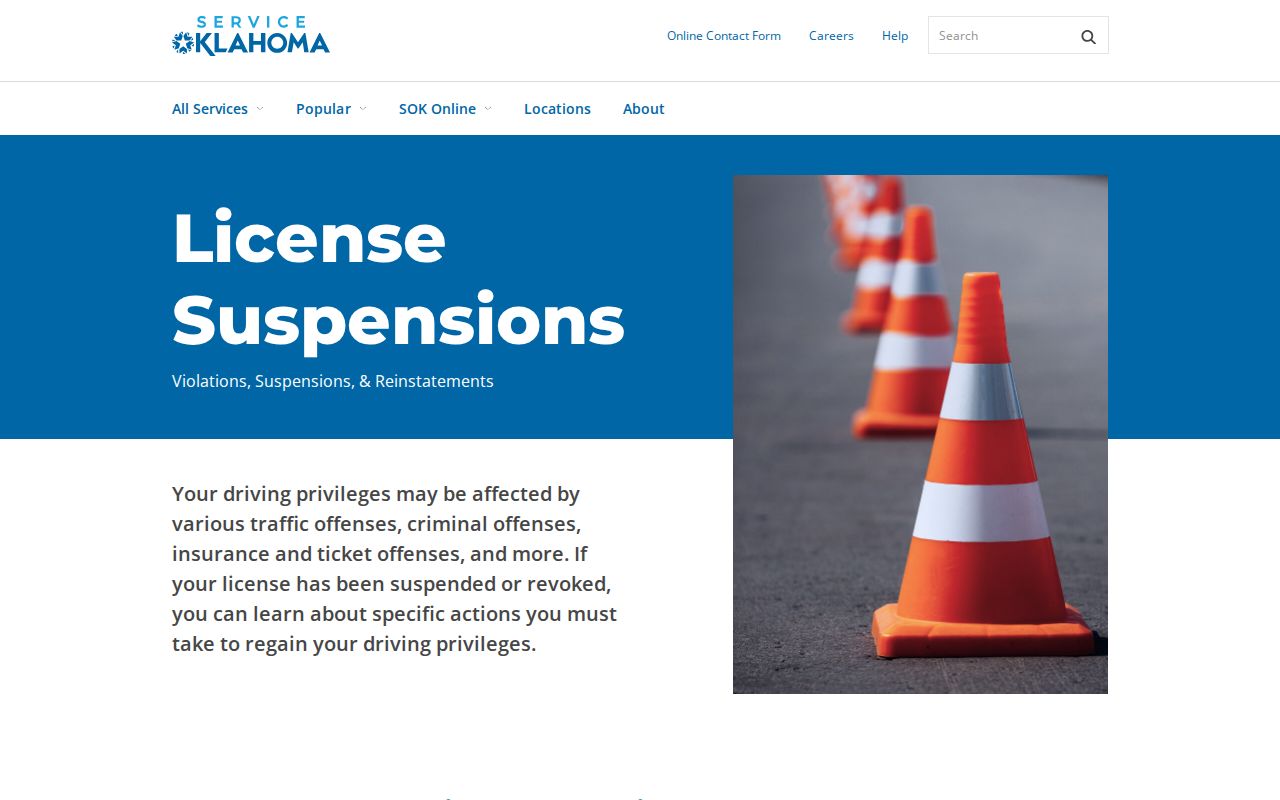
Oklahoma license guidance appears in public view here. It offers no FTA warrant search and cannot confirm whether an Oklahoma court recalled a warrant.
Oklahoma Traffic Warrant Checks
Begin with the court or city printed on the ticket. Public dockets can point to a case. They cannot certify that an active warrant stands. Oklahoma runs no public statewide warrant search, no statewide sheriff portal, and no public FTA lookup by name or driver's license. OLETS, ODIS, and NCIC stay restricted to criminal-justice use. The Oklahoma Highway Patrol holds a narrow statutory role, serving District Court traffic warrants and aiding fugitive manhunts, yet it is not a warrant-status desk. Its troop contact page maps geographic contacts, not a public search. For one Oklahoma ticket, the issuing court answers first.
- Read the Oklahoma citation or notice for the case number, issuing city or county, and court. Municipal Court and Oklahoma District Court are separate venues.
- Check OSCN for participating court docket events. Its traffic-citation search does not search municipal citations. For a participating court outside OSCN, use OSCN's link to ODCR.
- For an Oklahoma city ticket, use that city's Municipal Court and police or warrant office. For example, the Tulsa Police search covers that city's municipal warrants only, not statewide records.
- Open Browse Counties to find the relevant county's official court and sheriff route. Sheriff search coverage varies; some offices have an online list, while others require a call or request.
- Ask the District Court Clerk or municipal clerk for the case and warrant order, then confirm service or booking status with the local sheriff or city police warrant unit. Oklahoma has no single state warrant phone line.
- If the public record you need is not online, send a focused request to the government body that keeps it under the Oklahoma Open Records Act. The court clerk holds court files; law enforcement holds its service and disposition records.
- Once the court matter is clear, use Service Oklahoma's public reinstatement information to confirm any separate license step.
When a record is not online, the Oklahoma Open Records Act is the route. Name the court case or enforcement outcome sought. Send the request to the office holding it. A clerk's docket, an officer's service record, and a credential-agency suspension file are three separate files, so ask each office directly. Ask for its own record and any lawful access limit.
Oklahoma City Tickets May Be Outside OSCN
A docket search is not a shared Oklahoma warrant register. OSCN's citation-number notice excludes municipal citations. So a city ticket can be missing there even when an Oklahoma city still holds its own court record. ODCR widens access to some non-OSCN Oklahoma dockets. Participation and data currency vary. Neither public portal promises a live warrant-status field for every Oklahoma court. For Oklahoma city-ordinate matters, use the issuing Municipal Court's own case or warrant channel. Call if the result is unclear. A county sheriff page may leave out city-court process. A blank docket hit does not prove no warrant exists. Ask the issuing clerk which Oklahoma office can confirm the current order and what record you can request.
Note: Oklahoma city-court citations can sit outside a public docket search even when the municipal court keeps its own case file.
Clearing an Oklahoma Traffic Warrant
Paying a ticket balance is not always the end. Confirm with the Oklahoma court whether an appearance, bond, motion, or recall order is also required. For qualifying costs, ask about an ability-to-pay hearing. An approved payment arrangement may be an option. If surrender or custody worries you, an attorney can contact the Oklahoma court and lay out a safe route.
- Confirm the exact citation, court, warrant type, current status, and any bond or appearance term with the clerk.
- Ask whether the case can be paid, set for a hearing, placed on a plan, or needs a motion or in-person appearance.
- Request a written disposition or recall order and ask which office sends the status to the sheriff and credential agency.
- After court compliance is recorded, contact Service Oklahoma to confirm any separate suspension or reinstatement requirement.
Caution: Paying a ticket does not by itself prove the court recalled its warrant or the separate license hold has cleared.
Get the disposition in writing once the Oklahoma court resolves the case. Ask when the service agency will receive it. A court's recall, a sheriff's record, and Service Oklahoma's license status can update at different times. Keep the paperwork and confirm each remaining Oklahoma traffic record with the office that holds it.
Oklahoma's Traffic Fees Are Separate
For the covered Oklahoma §1115.5 failure-to-appear suspension process, 47 O.S. §6-212 lists a $25 processing fee and a $25 reinstatement fee where applicable. Those are credential charges only. They are not the ticket balance or court costs. The Oklahoma court sets the underlying fine and decides any warrant bond or appearance requirement. A license fee does not recall the warrant. Do not fold the two agency fees into one promised total debt. Other Oklahoma suspensions, case charges, court fees, and eligibility rules can shift what you owe. The current statutory fee text explains the credential charges. Ask Service Oklahoma for current reinstatement requirements. Ask the issuing clerk for an Oklahoma case accounting and the separate court action the warrant needs.
Oklahoma Traffic Warrant or Driver Record
An Oklahoma traffic warrant and a driver record are different records kept for different reasons. This comparison concerns a court case and its process. It cannot obtain or evaluate a person's driving history. For an Oklahoma citation, the court remains the source of the warrant order. Service Oklahoma answers separate license-status questions.
| Question | Traffic Warrant | Driver Record |
|---|---|---|
| Record type | Court order tied to a citation or required appearance | Credential history held by the licensing agency |
| Who controls it | Issuing Oklahoma Municipal or District Court; sheriff or city police may have service records | Service Oklahoma for the license record |
| How to confirm | Ask the issuing clerk and serving agency about status and required action | Use the agency's public reinstatement or credential channel |
| How it clears | Court-directed payment, appearance, bond, or recall as ordered | Complete the agency's separate reinstatement requirements |
Neither channel proves what the other office has done. Keep court and agency confirmations with the case papers. Note: Keep Oklahoma court and credential-agency confirmations together because a warrant recall and license reinstatement update different records.