
Oklahoma Warrant Searches
Pull out the citation, court notice, bond paper, or case number first. That paper names the county or city. It also points to the court holding the case. Oklahoma keeps District Court and Municipal Court dockets separate, and a city citation stays with that city even after a move. Search the named court, then ask its clerk about the order and the sheriff or city police about service. OSCN and ODCR can locate some docket events across Oklahoma, but neither is a statewide warrant list. A sheriff's name page covers only that office's records. Oklahoma cities run their own court and police channels. When no online route exists, request a releasable record from the custodian under the Oklahoma Open Records Act. Only the issuing court can clarify its own order.
- Use the Oklahoma court, county or city, and citation details on the notice to identify the venue.
- Search OSCN or ODCR for the docket, not as live warrant confirmation.
- Check the sheriff's own channel, then use the county directory for Oklahoma court and sheriff contacts.
- For a city citation, contact that Oklahoma Municipal Court or police unit.
- Ask the clerk and serving agency about status, bond or appearance terms, and how the order is cleared.
Oklahoma Has No Statewide Warrant Search
Oklahoma offers no public name-and-birth-date lookup covering all active warrants. Under 47 O.S. §2-124.1, the Office of the Administrative Director of the Courts sends computerized arrest-warrant identification information to DPS for authorized OLETS users. That Oklahoma feed stays locked away. Only law enforcement reaches it, through no public form and no result page. The statute calls the data current. It does not mean changes happen instantly. Public materials name no warrant subtypes, no per-court submission method, and no update schedule. OLETS, ODIS, and NCIC are restricted systems too. None of them proves that every Oklahoma local warrant sits in one complete file.
Key point: Oklahoma has no public statewide warrant lookup. A public docket or local search can help identify a case, but only the issuing court and serving agency can confirm the current warrant status.
Start an Oklahoma name check at the known court. Then contact that county sheriff or city court. If the venue is unclear, check the case papers or ask a clerk before searching elsewhere, because a no-result is no clearance.
What an Oklahoma Warrant Search Asks For
Oklahoma has no public form with set required fields for every statewide warrant. Each channel searches different records. OSCN and ODCR search dockets, while sheriff and city pages cover local files. The fields here reflect what each screen shows. Oklahoma interfaces rarely mark a field as required. Assume nothing the form itself does not display. The OSCN public case-search form offers court, party, case-type, date, and citation controls, and its blank Oklahoma screen shows docket fields rather than all-county warrant results.
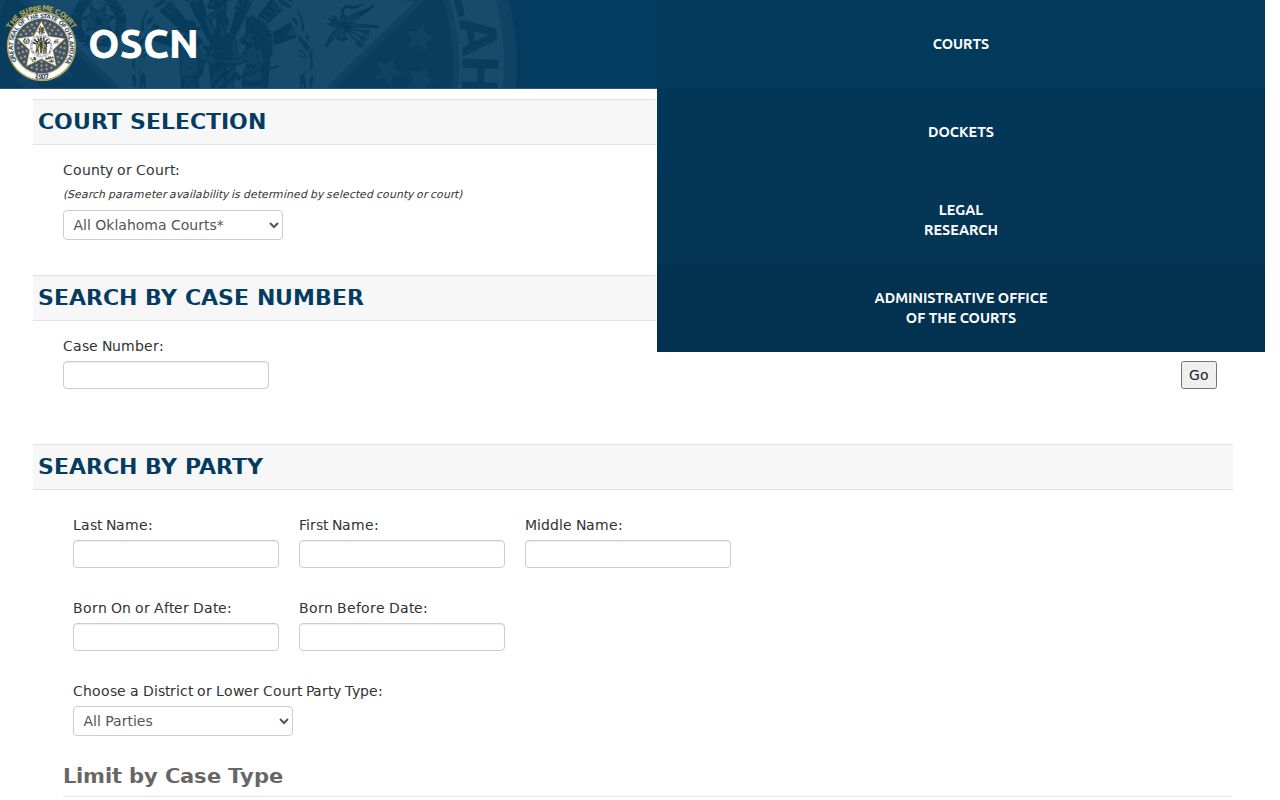
OSCN's visible controls help you find the case itself. Warrant status still has to come from the issuing clerk or the serving office.
| Portal or channel | Visible fields | Required | Scope and limit |
|---|---|---|---|
| OSCN | Oklahoma court or county, case, party, type, date, lower-court, and traffic citation fields. | Varies. | Available dockets; citation search excludes municipal tickets. |
| ODCR | Court, party, type, case-number parts, and filing or activity date. | Not confirmed. | Participating non-OSCN dockets, not warrants. |
| County sheriff example | Oklahoma County first and last name. | Both names. | That sheriff's active warrants; no DOB field observed. |
| Tulsa Police | First and last name. | Not confirmed. | Tulsa Municipal Court warrants; local updates may lag. |
| OKC ticket lookup | Search type, ticket, name, DOB, license, or tag details. | Varies. | Oklahoma City citation and case data, not statewide warrants. |
The ODCR search interface selects participating Oklahoma courts. Its displayed court count can change, which is no guarantee of complete coverage.
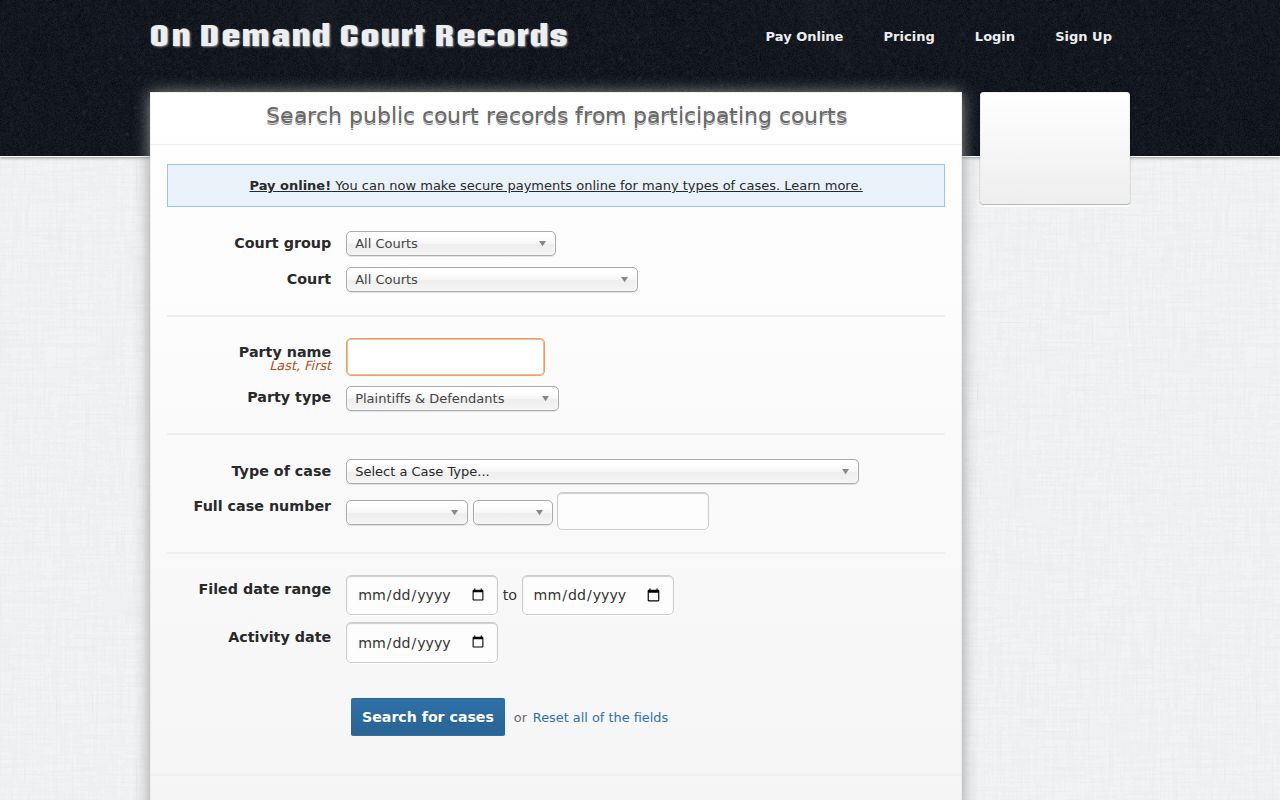
Use the selected Oklahoma court and case details. Track the docket. Then ask that court about warrant status. Note: Oklahoma custodians use separate search fields, with no shared public warrant-number or status-code format.
Oklahoma Dockets Are Not Warrant Registers
OSCN posts public Oklahoma dockets for its courts. ODCR serves participating non-OSCN courts. Either can locate a filing, hearing, or disposition, but neither certifies active warrant status or covers every Oklahoma court. OSCN also excludes city tickets from its citation search, and ODCR's changing court count guarantees nothing about coverage. A docket entry records a court event. It may not show whether an Oklahoma warrant was served, returned, recalled, or updated in a sheriff's file. A case disposition does not prove every agency record changed either. Use the case number to confirm identity. Then ask the court and the serving office what each record currently shows. The Oklahoma County Sheriff's search asks for a first and last name and covers only that office's warrants. It warns that records may be stale or inaccurate. A blank result still needs direct confirmation. An Oklahoma city ordinance case may sit with Municipal Court and police, outside any District Court docket or county list. Follow the city named in the notice.
Oklahoma Warrant Search Results
An Oklahoma docket or local search may return a case, name, filing, citation, or a local warrant entry. No statewide format promises identical fields. A name match may not show current service status. Use the results as a checklist for the custodian, not a screen specification.
| Issuing court | Which Oklahoma District or Municipal Court entered it? |
|---|---|
| Case or citation | Use its number to distinguish a same-name person. |
| Warrant type | Ask whether it is arrest, bench, cost arrest, or cite-and-release process. |
| Issue date | Title 22 specifies ordinary warrant details, but a search screen may omit the date. |
| Service and return | Ask the clerk and serving Oklahoma agency what each record shows. |
| Bond or appearance | Confirm bailability, amount, bond type, or required court appearance. |
| Clearance | Ask what resolves it and which Oklahoma office receives the update. |
Under 22 O.S. §§172–173, an ordinary warrant must identify the accused, the offense, and the issuance details, with bail set when applicable. Oklahoma search pages share no statutory display format. Active, served, returned, and recalled can carry different meanings in court records and agency files. A recall withdraws the process. Each local Oklahoma system may update later. Note: A warrant entry may omit service information, so confirm the record with both the court and the agency.
Request a Warrant Disposition From Its Custodian
Oklahoma treats a warrant disposition as a public record, so you ask the office that keeps it. That custodian is the District Court Clerk, a Municipal Court clerk, the sheriff, or a police department. The Oklahoma Attorney General's request guidance explains the basics. The Oklahoma Open Records Act, 51 O.S. §§24A.1 et seq. governs access, and §24A.8 addresses law-enforcement warrant dispositions subject to exceptions. In the request, identify the Oklahoma court, the case number, the date range, and the disposition or return sought. Ask for releasable portions if anything is withheld. The Act requires prompt, reasonable access. But it sets no single statewide form, fee, or response deadline, and a written request brings documents rather than urgent status confirmation. The Attorney General offers general guidance. The Oklahoma custodian remains the source for the file.
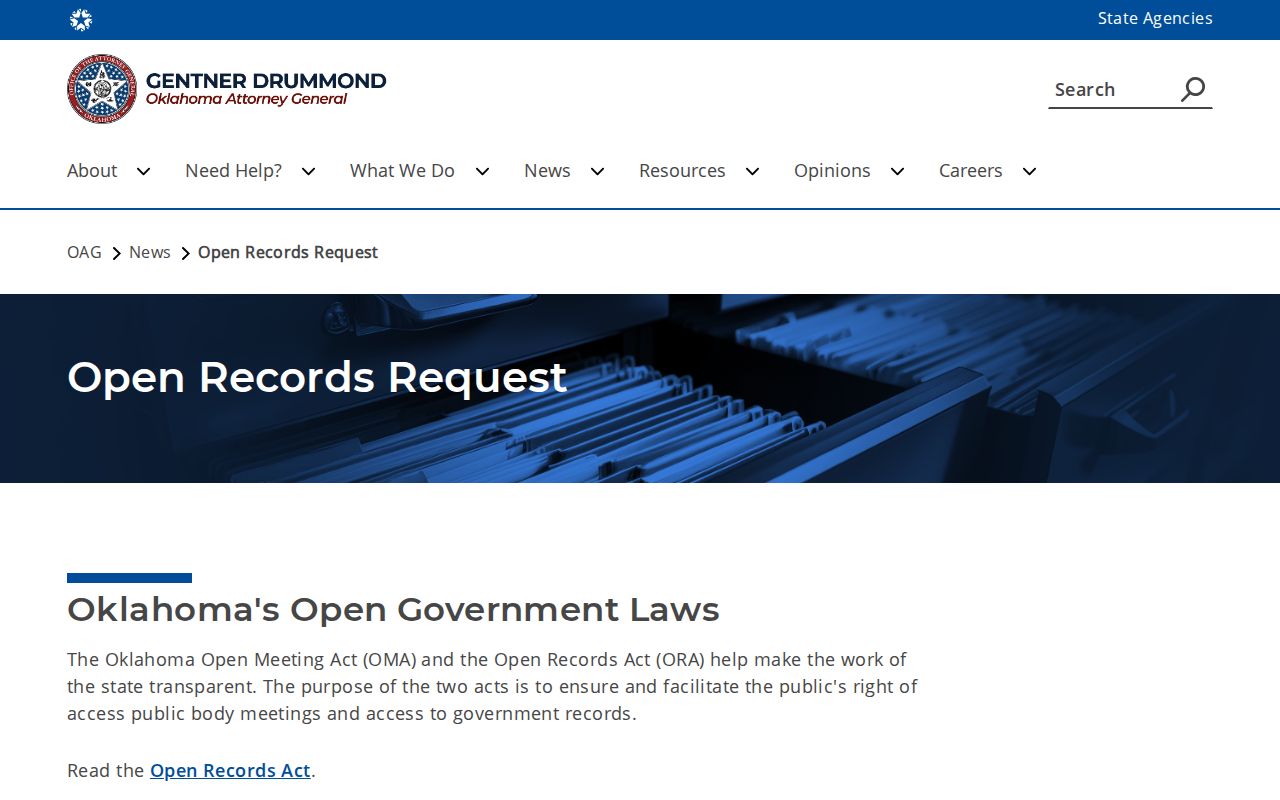
Frame a focused request around the warrant disposition you need, then send it to the office that actually holds it. The Oklahoma County blank request page shows one county's instructions for doing so. It stands for that county alone, not a statewide fee or delivery rule.
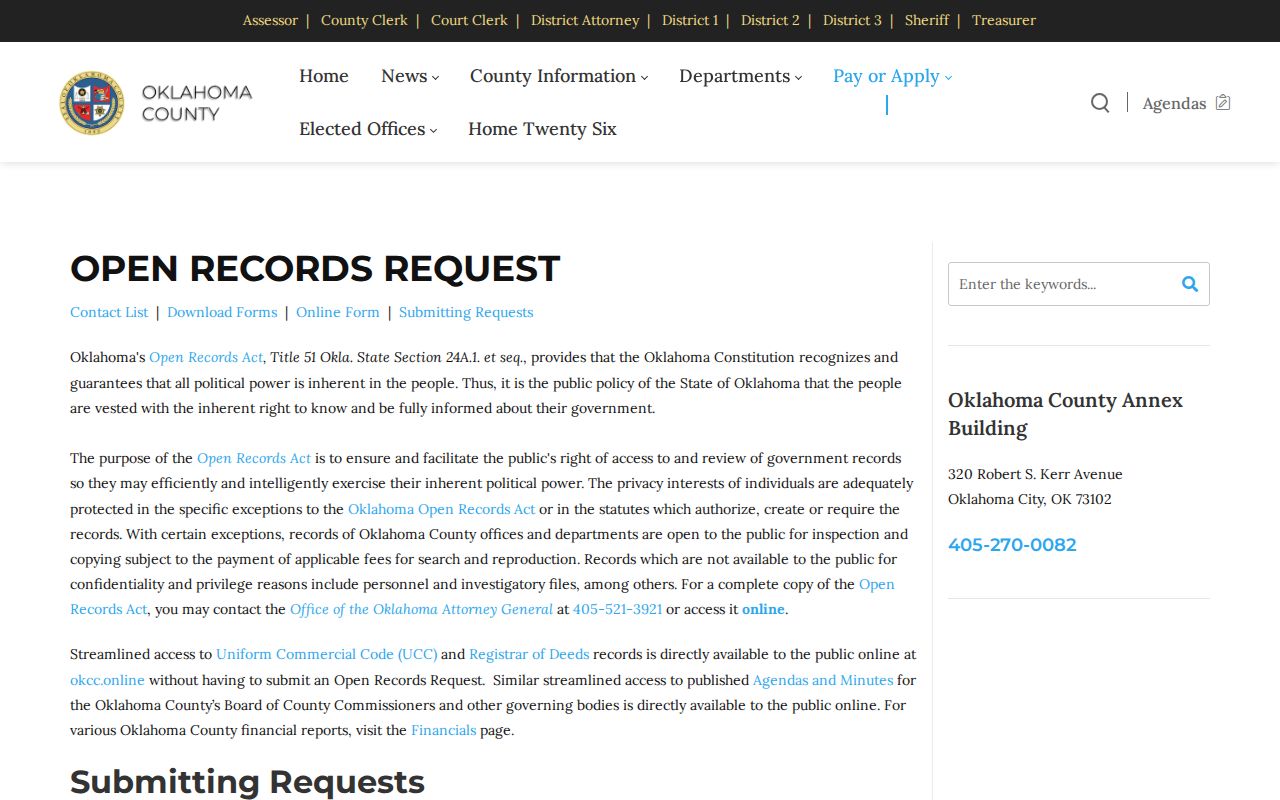
Check that Oklahoma custodian's current instructions and keep court-file and sheriff-record requests separate.
Oklahoma Warrants: Who Holds What
Start with the right office. In Oklahoma, the District Court Clerk holds the case and can confirm the judge's order, the next date, or a recall. The sheriff or serving officer keeps service and booking records instead. Municipal Court clerks and city police handle the ordinance process. One office may not verify another's file. Oklahoma spreads warrant work across 77 county sheriffs, with no single statewide portal or phone line. A local office may publish a name page or route callers to records staff. The county directory points to each county court and sheriff. For a city ticket, start with that city's Municipal Court. The clerk speaks for the judicial order; the sheriff speaks for its own service status. A restricted court-to-DPS feed is separate from all this and does not create a public statewide search. Court orders, sheriff returns, and city records each have their own custodian, so ask every office for its current entry.
City Warrants Stay With the Municipal Court
City cases run on a city track. Oklahoma cities operate separate Municipal Courts and police channels, so county and state tools will not reach them. The Tulsa Police name search covers Tulsa Municipal Court warrants only, and Oklahoma City's ticket lookup handles its own citation and case data. Neither is statewide. Ask the named city court about its records. Federal warrants take a federal route: Oklahoma sits in the Western, Northern, and Eastern U.S. District Courts, and the PACER Case Locator may find public docket events, though sealed records and warrants may not appear. U.S. Marshals serve federal process, and no state or city search can confirm a federal warrant. For a traffic failure to appear, ask the Oklahoma court about its warrant and Service Oklahoma about a separate license suspension or reinstatement. No public license-number warrant search exists, and paying a license fee will not recall court process. The Attorney General's 10 Most Wanted program is a selective fugitive campaign, not a statewide warrant list, and absence from that page proves nothing. Note: a municipal citation, a federal warrant, and a driver-license hold each require the custodian for that record type.
Which Oklahoma Warrants Stay Restricted
Access in Oklahoma depends on the record. Juvenile files are generally confidential, with exceptions. Grand-jury material may stay secret under 22 O.S. §385, and a judge can seal a document outright. The Oklahoma Open Records Act also lets an agency withhold or redact protected investigative material. None of this makes every active warrant secret. A public docket may omit a sealed order, and that does not justify republishing another person's identity. If a custodian denies access, ask for the legal basis and any releasable portions. A records request cannot override a seal, so for personal status contact the court or serving agency directly.
Access rules:
OLETS, ODIS, and NCIC are restricted to authorized criminal-justice users, not public warrant-search services.
Juvenile, sealed, grand-jury, and protected investigative records may be withheld or limited under the law.
No Oklahoma search result proves every court and agency has been checked.
Ask the Oklahoma clerk whether any recall or return was entered. The serving agency can say whether its record changed; a request may seek releasable details, not override a seal.
Confirm a Warrant Before Acting
Take the case number to the Oklahoma clerk if a result may concern you or a relative. Confirm the warrant type, its present status, any bond or appearance terms, and the required action. Then ask the sheriff or city police about service or booking. Do not travel or pay based on a third-party result. The clerk may explain a court date, a motion, a payment plan, or a local surrender option. The order controls, and only the Oklahoma court sets legal terms. Keep receipts or signed orders, and ask which office sends any update. Exact spelling plus a case number helps separate a namesake. No docket result is an official clearance. Confirm the order with the court and the service record with the responsible agency. Note: For statewide status limits and local-list caveats, see the Active Warrant Search page.